



Long before arena tours and platinum records, a woman with a clear, intimate voice stood at the center of American popular music. Mildred Bailey, known in her day as “The Queen of Swing,” was among the most influential vocalists of the 1930s, shaping the sound and style of jazz singing in ways that continue to resonate.
Born in 1907 on the Coeur d’Alene Reservation, Bailey was one of the first Native American women to achieve national stardom in popular music. Her mother, a gifted pianist, filled the family home with hymns and parlor songs, helping shape Bailey’s early musical sensibility.
In the 1920s, Bailey and her brother, Al Rinker, traveled to Los Angeles at the invitation of a young singer named Bing Crosby. Bailey soon became a vocal coach and mentor to Crosby, helping him refine a relaxed delivery that would become one of the most influential approaches in American popular singing. Crosby went on to become a household name, taking cues from Bailey’s phrasing and style.
Bailey’s big break came in 1929, when she joined the orchestra of Paul Whiteman, then billed as the “King of Jazz.” At a time when most big bands featured male crooners, Bailey’s tone and rhythmic sophistication set her apart. Their professional relationship began unexpectedly, at a dinner party.
“Mildred is cooking for this huge big band, and she ends up sitting down at the piano and singing,” jazz vocalist Julia Keefe said. “Paul Whiteman hears her sing and decides to bring her on as his full-time jazz vocalist in 1929. There had been a couple of female vocalists who had sung with big bands before, but this was the first time that we had seen, at least according to the history books, a female vocalist fronting a big band in a full-time capacity. She wasn't a guest. She was the girl singer for that band. She was with the Paul Whiteman Orchestra for a couple of years.”
After a series of less successful marriages, Bailey married vibraphonist Red Norvo in 1933, forming one of the Swing Era’s most celebrated musical partnerships. Together, they recorded small-group sessions that were notably forward-thinking, pairing Norvo’s light vibraphone tone with Bailey’s warm, understated vocals.
During an era defined by the explosive energy of swing, when big bands dominated ballrooms across the country, Bailey demonstrated that subtlety could be just as powerful. She drew listeners in through warmth, phrasing, and emotional restraint.
Health struggles, including diabetes, along with financial difficulties in the 1940s, curtailed her career. By the time she died in 1951 at age 44, Bailey’s name had already begun to fade from mainstream memory. Unlike some of her contemporaries, she left behind neither a dramatic public persona nor a mythology shaped by tragedy. Still, her influence persisted.
Unlike many singers of her era, Bailey approached songs as a jazz musician. On recordings such as “Rockin’ Chair” and “Georgia on My Mind,” her phrasing feels strikingly modern. Rather than overpowering a melody, she became part of it.
Her influence spread quickly. Fellow vocalists studied her breath control and her ability to swing without strain. Billie Holiday admired Bailey’s rhythmic sense, and traces of Bailey’s intimate delivery can be heard in the work of Ella Fitzgerald. Even as those artists forged their own groundbreaking styles, Bailey’s imprint remained.
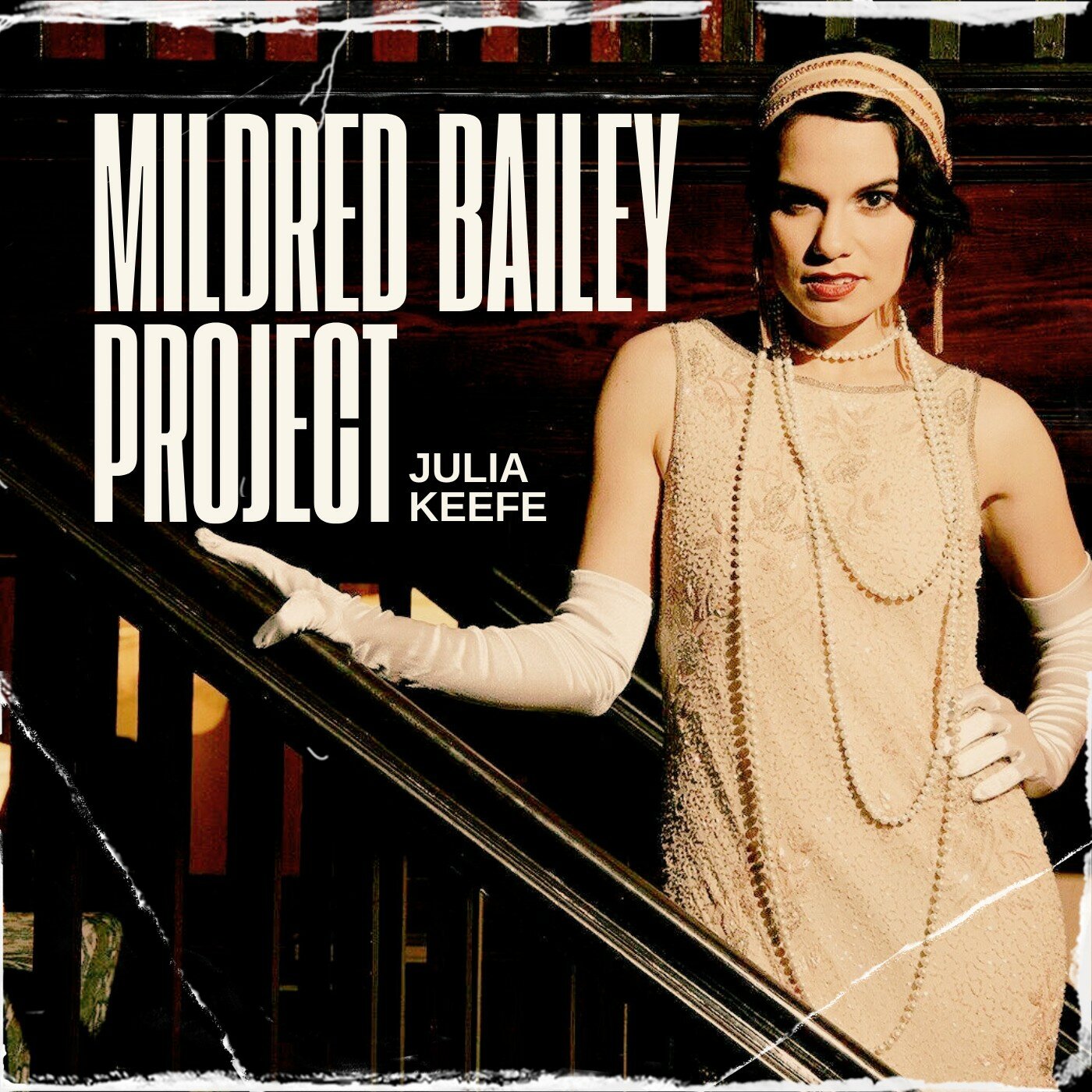
The Mildred Bailey Project
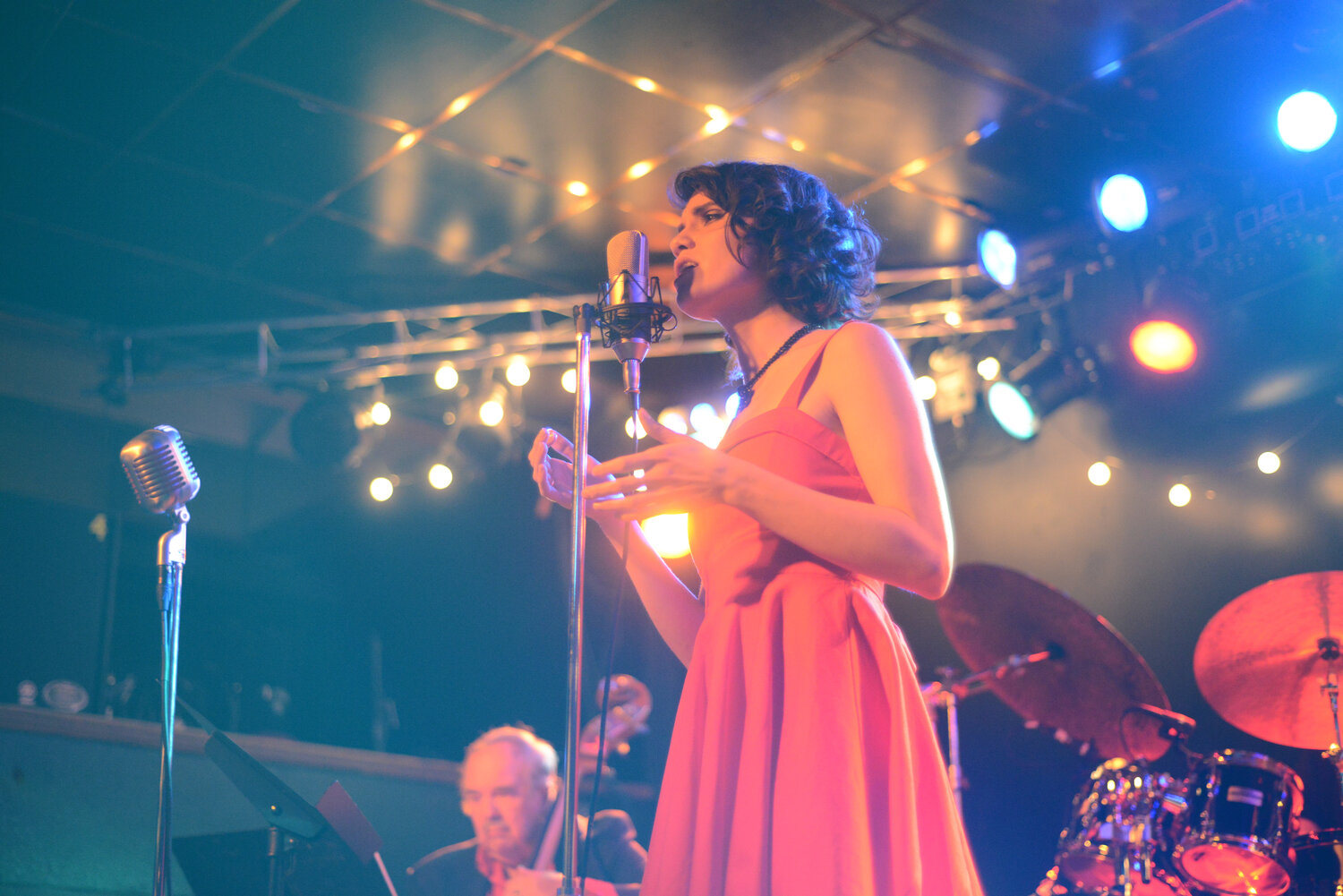
One contemporary artist deeply influenced by Bailey is Julia Keefe. An internationally acclaimed Native American jazz vocalist, actor, activist, and educator based in New York City, Keefe shares both cultural heritage and artistic purpose with Bailey. Her work includes honoring her fellow Coeur d’Alene jazz musician.
Keefe grew up on the Nez Perce Reservation before moving to Spokane, Washington, where she began studying music. She earned her bachelor’s degree from the University of Miami Frost School of Music in 2012, graduating with honors, and later taught jazz voice at Gonzaga University.
She earned her master’s degree from the Manhattan School of Music in 2019. Keefe currently directs the Julia Keefe Indigenous Big Band, a project highlighting the history and future of Indigenous people in jazz. The ensemble’s first studio album is scheduled for release in spring 2026.
The Mildred Bailey Project is part concert and part history lesson. Keefe brings shared Indigenous background and jazz artistry to the stage, while also serving as a historian determined to keep Bailey’s memory alive.
Music historians now recognize Bailey as a pivotal figure in the evolution of jazz singing. In many ways, she anticipated the cool, understated approach that would later define mid-century jazz and pop. Her home also served as a gathering place where musicians forged new opportunities.
“The Benny Goodman Trio formed because they were over at Mildred's house hanging out and having a jam session, drinking and eating and having a good time,” Keefe said. “Her place was the place to hang out at for all of these jazz musicians, and lo and behold, these amazing ensembles would come about because of these social engagements that she would host.”
Bailey also hosted her own radio show, which reflected her humor and independence.
“She also went on to host her own radio show that is so funny to listen to. You could hear her kind of flub her lines and laugh at herself, and she's laughing with the other guys in the band while she's doing this radio show, but she ended up getting taken off the air because she didn't want to have a segregated band on her radio show. She wanted it to be integrated.”
Bailey frequently performed at Cafe Society, an integrated club on the Lower East Side during the 1930s and ’40s.
“She was a lady who was very much ahead of her time,” Keefe said. “And she was also a lady…it's so wild because so often she's described as hotheaded and difficult to work with and this is a lady who was out in front of her skis in terms of leadership, but she was a woman who knew what she wanted as an artist.”
Uncovering the real Mildred Bailey
That lack of understanding about Bailey’s life and identity is part of what motivates Keefe’s work.
“She didn't fit into any specific box in terms of her identity,” Keefe said. “There were articles written about her where people were debating her ethnicity. ‘The way she sings, she must be black. Oh, but her skin is so fair, she must be white.’ Lo and behold, she's native, she's an Indigenous woman.”
Bailey also challenged stereotypes in other ways.
“She had this very tiny lilting soprano voice, but she was also a larger woman in terms of her physique, and she was a jazz singer, and the stereotype of jazz singers is that they're dumb and they don't know what they're doing and they need to be told what to do at all times.”
“She knew exactly what she was doing and she was very smart so I think the industry was not welcoming to a larger woman with a larger personality, especially at that time, and honestly, I would say, even now, especially now. The industry really hasn't changed much. I obviously very much adore this woman. She has very much been my north star since I was about 14, and had started singing jazz music.”
“For me, being Indigenous as well, it was very happenstance stumbling across her name. That was the first time I saw myself reflected, my identity reflected in this art form that I love so much. As a young jazz vocalist coming up, it was really great to sort of point to this historical figure and say, ‘We've been here and I'm allowed to be here too because Mildred Bailey was here before me. The Mildred Bailey Project really did start from dedicating a song to her in my very early gigs in high school in Spokane, and from there it really did snowball into this larger project.”
Keefe was raised on jazz music. Her earliest musical memory involves listening to Billie Holiday as a child.
“My mom had some Billie Holiday records, and I vividly remember being in the living room while my mom was sort of tidying up and listening to Billie Holiday. And I remember looking at the CD case. It was this periwinkle, sort of a cloth-covered album and I remember looking at the pages. And when I started singing jazz many, many years later, as, a teenager, I remember thinking, ‘I need to find that Billie Holiday record again.’”
Today, as conversations about representation and overlooked pioneers reshape our understanding of American music, Bailey’s legacy has gained renewed attention. As a Native American artist navigating a predominantly white, male industry, she carved out space through excellence.
Her life was marked by hardship, and her fame did not endure as it might have. But influence is not always measured in headlines. Sometimes it is measured in what remains when the song is over.
In that sense, Mildred Bailey never really left the stage. She lives on in the music, and in the work of Julia Keefe.


